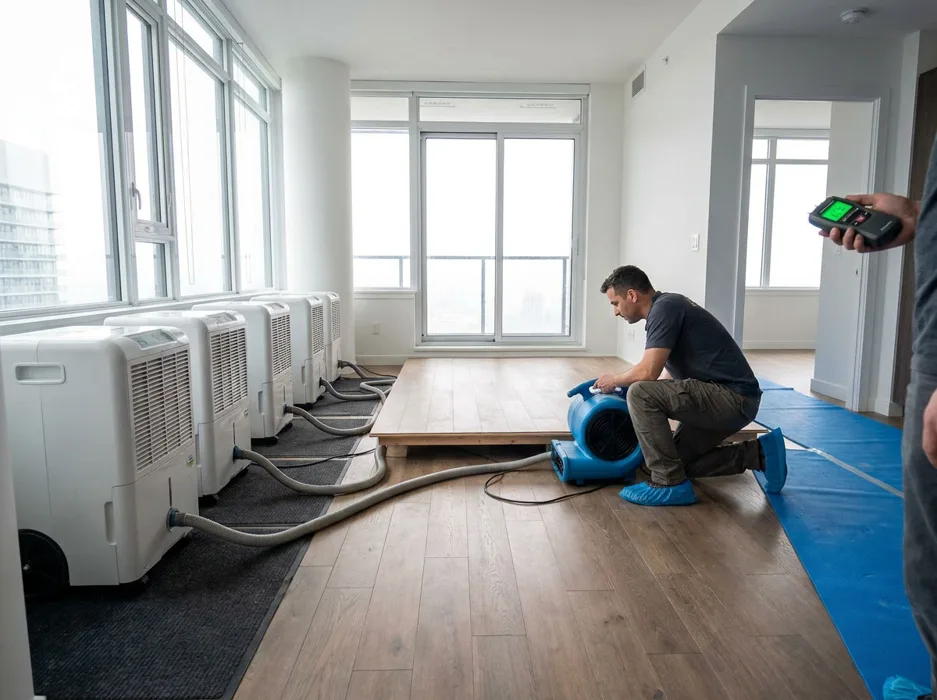
Structural drying concerns the affected assembly, not merely comfortable room air. Flooring, wall cavities, framing and insulation respond differently.
Structural Drying Targets the Building Material
Structural drying concerns the affected assembly, not merely comfortable room air. Flooring, wall cavities, framing and insulation respond differently. Ask what will be measured and which reference condition will be used. The dry standard should relate to the material and appropriate unaffected comparison locations. A calendar estimate is not a substitute for measurements.
Source Control Comes First
Continuing entry can defeat a drying plan. Confirm that the source is addressed and accessible water removed. Contamination changes the sequence: cleaning or removal may precede air movement. The provider should explain retained materials. Do not move fans into a suspected contaminated area based on an online capacity calculation.
Read the Drying Equipment Scope
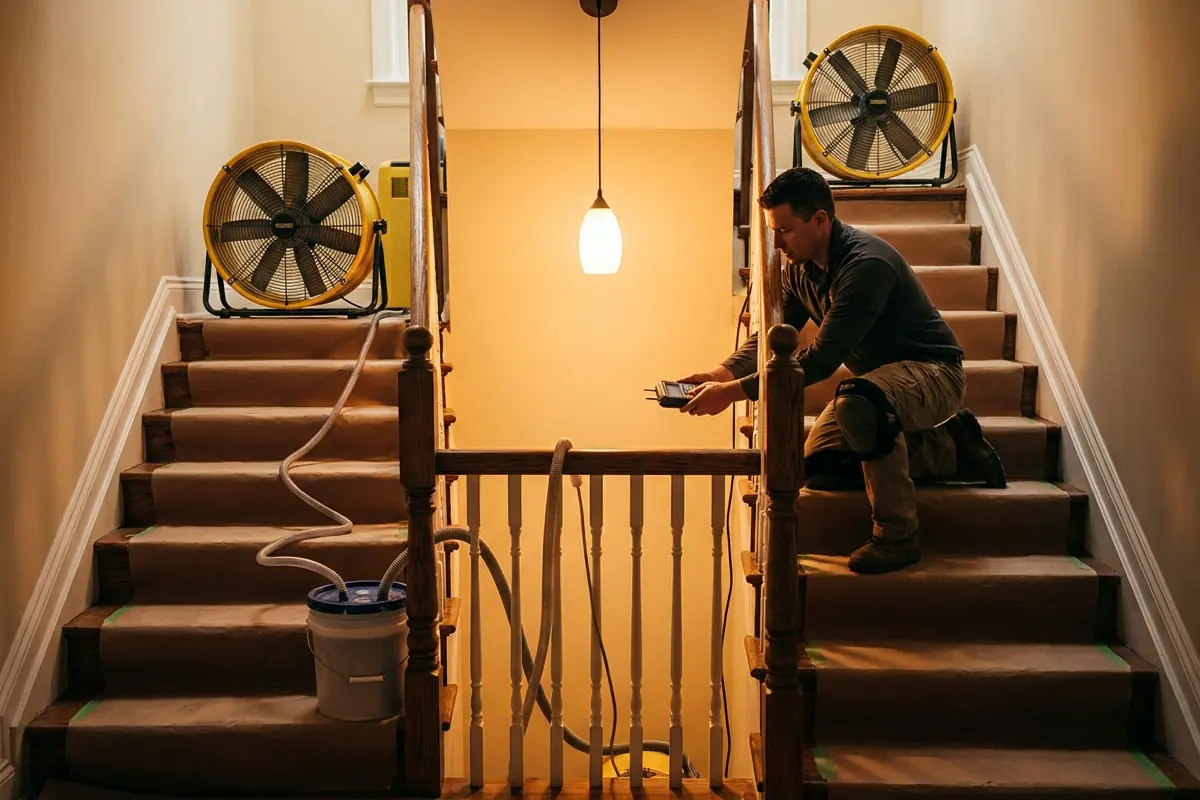
Ask for unit types, count, billing period, monitoring charges and removal criteria. Clarify electricity costs. Get instructions for reporting noise, circuit or access concerns rather than changing the setup yourself. The electricity tool estimates kWh from watts and hours; it does not determine which equipment a building needs.
Make Moisture Readings Comparable
Record time, location, material, meter mode, unit and reading. Numbers from different materials or modes may not form a meaningful trend. The log groups matching series rather than comparing a wood percentage with a relative drywall scale. Note equipment changes. Export regularly; session entries stay in this browser without being uploaded.
Dehumidifier Rated Capacity Is Not a Drying Forecast
A rating is measured under specified conditions. Actual removal changes with temperature, humidity, infiltration and construction. Dividing a water load by rated capacity is arithmetic, not a completion prediction. Ask how equipment selection responds to site conditions instead of choosing units from room square footage alone.
Close Structural Drying With Evidence
Request final readings, the comparison basis and a list of materials still needing replacement. Confirm whether the agreement covers cleaning, removal and rebuilding. Keep equipment dates and invoices with the moisture record. This website and its log do not certify dryness, safety or readiness to close a cavity.
What Structural Drying May Cost in Garland, TX
| Work | Benchmark | Source |
|---|---|---|
| Clean water cleanup and drying | $4 to $6 per sq ft | HomeGuide: Water Cleanup Cost Benchmark |
| Gray water band | $6 to $9 per sq ft | HomeGuide: Water Cleanup Cost Benchmark |
| Black water band | $9 to $12 per sq ft | HomeGuide: Water Cleanup Cost Benchmark |
National ranges, not Garland offers. Access, hidden damage, minimums and rebuilding change real bids.
Questions to Ask Before Approving Structural Drying
- Which tasks, quantities and exclusions are written into the scope?
- Who repairs the cause and obtains applicable permits?
- How are equipment days, disposal and changes billed?
- Which licenses and insurance apply, and how can I verify them?
Ask for the business name and written terms. You choose whether to hire an independent provider. A referral is not a warranty, inspection or insurance decision.
Texas Insurance and Garland Rules for Structural Drying
Describe the source, timing and damage accurately. Keep photographs and professional findings. Ask the insurer which provisions apply. Trade permits and licenses depend on the actual repair, not the name of a restoration service.
Structural Drying Guidance in Nearby Cities
Guidance for this situation is also available in Dallas, Plano, Mesquite, Richardson, Rowlett and Rockwall. Confirm address availability by phone.
Sources and Further Reading
Moisture & Drying Log
Record comparable readings without predicting or certifying dryness.
Free to use. Inputs stay in your browser.
Sources, Assumptions and a Worked Example
Hypothetical example: A hypothetical wood location recorded at 24%, 20% and 17% on successive dates shows a downward trend. It does not prove that the assembly is ready to close.
Results are planning scenarios, not provider prices, professional sizing or insurance decisions. Avoid overlapping scopes. Read the methodology