
A warm spot on the floor, a meter that moves with everything off and an unexplained jump in the water bill are the classic signs. A plumber with leak detection confirms it.
What a Slab Leak Is
Most Garland homes sit on a concrete slab, with water supply and drain lines running underneath or inside it. A slab leak is a leak in one of those buried lines. Because the pipe is hidden, the first signs usually show up somewhere else: on the floor surface, in the water bill or at the meter.
Supply line leaks are pressurized and run constantly, so they tend to show up faster on the meter and bill. Drain line leaks only leak when water goes down the drain, so they can take longer to notice.
The 7 Most Common Slab Leak Signs
- A warm or hot spot on the floor, often from a leaking hot water line under tile or wood.
- Damp carpet, swelling baseboards or cupping hardwood with no visible source.
- A water meter that keeps moving when every faucet and appliance is off.
- A water bill that rises without a change in habits, guests or irrigation.
- The sound of running water when nothing is on.
- Low water pressure or a water heater that seems to run constantly.
- New cracks in flooring or musty odors near the same area of the house.
None of these proves a slab leak on its own. A running toilet, an irrigation leak or a failing water heater can cause several of the same symptoms. Treat them as reasons to investigate, and write down what you notice, where and when.
How to Do a Simple Meter Test
A meter test tells you whether water is flowing somewhere when nothing should be using it. Only do this if the meter box is safe to open.
- Turn off every faucet, the dishwasher, washing machine, ice maker and irrigation.
- Check toilets are not refilling.
- Read the meter and note the exact time and the units, which may be gallons, cubic feet or hundreds of gallons.
- Wait 15 to 30 minutes without using any water.
- Read the meter again.
If the reading moved, water is flowing somewhere. The Garland TX Water Damage leak bill calculator turns two readings and the minutes between them into a steady leak rate and an estimated monthly cost. A moving meter shows that water is being used, not where the leak is.
What a Slab Leak Can Add to a Garland Water Bill
A small steady leak adds up quickly. At 0.1 gallon per minute, a leak loses 144 gallons a day and about 4,320 gallons in a 30 day cycle. Garland charges residential water in tiers of $6.13, $7.26 and $10.90 per thousand gallons at the 3,000 and 15,000 gallon boundaries, under the customer notice effective October 1, 2025. Leaked gallons are priced at the tier your usage reaches, so a leak on top of normal use often costs the higher rate.
Sewer works differently. Garland bills sewer on 98% of metered water, but limits it to the lesser of 17,000 gallons or 98% of your previous December through March average. Once that cap is reached, extra leaked gallons stop adding sewer charges for that bill. Dallas bills wastewater on actual use or the winter average, whichever is less. In both cities, a leak during the winter averaging months can raise later sewer charges.
When estimating, use your normal monthly gallons as the baseline, not the already inflated bill. Base charges do not change because of a leak.
Detection Comes Before Demolition
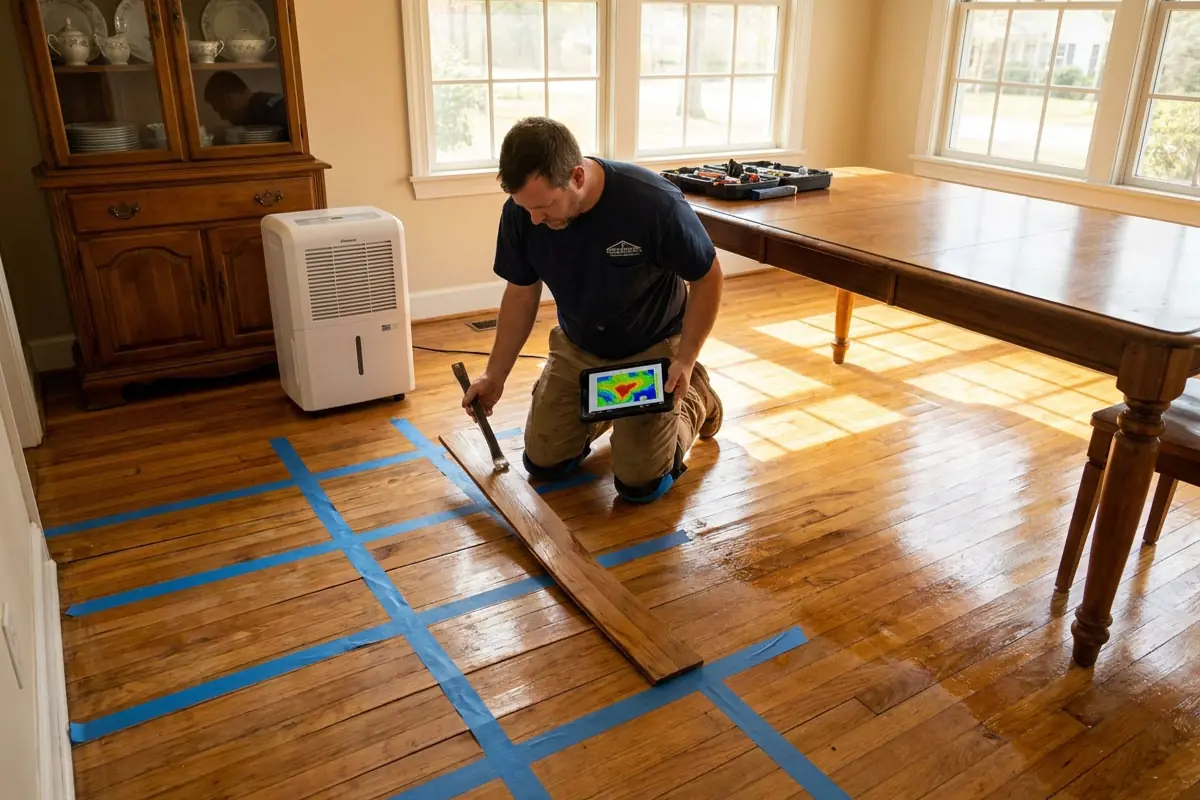
Ask for leak detection before anyone cuts into a floor. Plumbers use pressure testing, acoustic listening and thermal imaging to narrow the location. Ask what evidence supports the proposed access point and repair method, and how the disturbed floor will be restored.
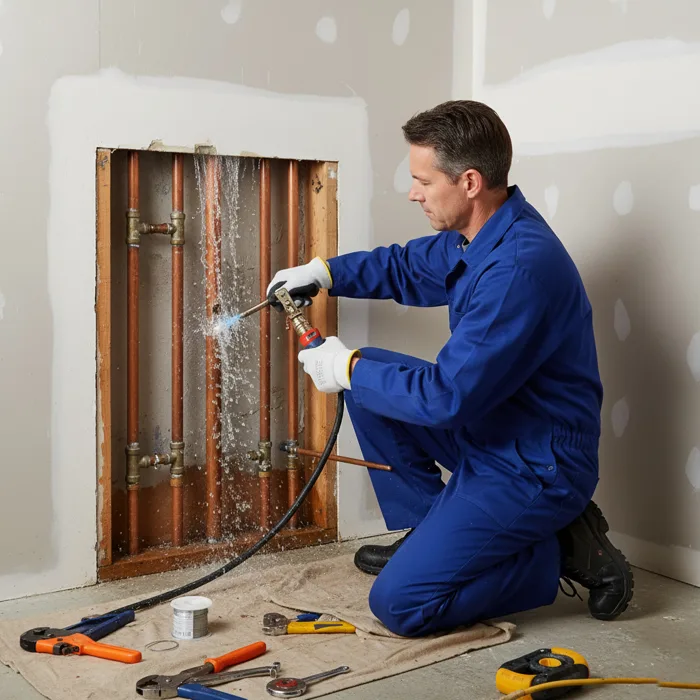
Repair usually takes one of three forms. A direct repair breaks through the slab at the leak. Tunneling reaches the pipe from outside, under the foundation. Rerouting abandons the leaking line and runs a new one through walls or the attic. HomeGuide publishes national ranges of $700 to $5,000 for digging into the slab to replace pipe and $500 to $3,500 for pipe lining. Tunneling, rerouting and repiping vary too much for one benchmark, so compare written quotes.
Garland Permits for Under Slab Repairs
The City of Garland publishes a permit process for under slab plumbing repairs. Repairs at rental properties require a state licensed master plumber registered with Garland. Before work begins, confirm who is pulling the permit, what inspections are required and what paperwork you will receive at the end. A restoration company drying the floor is not the same as the plumber responsible for the permit.
Slab Leak Insurance: Three Separate Questions
Keep three items separate when you talk to your insurer: the failed pipe itself, the cost of breaking in to reach it, and the water damage it caused to floors, walls and belongings. The Texas Department of Insurance explains that policies treat sudden, accidental damage differently from gradual leaks, so timing and cause matter. A policy may pay for some of these items and not others.
Give the adjuster the leak detection report, photos, your meter readings and the date you first noticed signs. Itemized quotes for plumbing and for restoration make the review clearer than one combined invoice.
Supply Line Leaks Versus Drain Line Leaks
Supply lines carry pressurized water into the house, so a leak runs around the clock. That is why supply leaks usually show up on the water meter and bill, and hot water supply leaks can create a warm spot on the floor. Drain lines carry wastewater out by gravity and only leak when water goes down a drain. They rarely move the meter, but they can cause damp flooring, odors or slow drains near the same area over time.
Knowing which kind you may have helps the plumber choose the right test. A pressure test checks supply lines. A camera inspection or a hydrostatic test checks drains.
Why Slab Leaks Happen
Plumbers commonly point to a few causes: pipes reaching the end of their service life, pipes rubbing against concrete or other pipes as the house moves and the water heats and cools, and installation problems such as kinks or poor joints. The cause matters less to you than the repair plan, but it can matter to your insurer and to whether a reroute makes more sense than a spot repair.
If one section of old pipe fails, ask the plumber about the condition of the rest of the system before choosing between a single repair and a larger reroute.
Protecting Floors and Belongings During Repair
A slab repair can mean cutting tile, pulling up hardwood or moving cabinets. Before work starts, ask how the plumber will protect the rest of the house from dust, who removes and resets flooring, and whether matching flooring is still available. Move valuables out of the work area. Ask the restoration provider to check moisture in nearby walls and floors once the leak is fixed, because water often travels farther than the visible damage.
What to Do Right Now About a Suspected Slab Leak
- If water is actively coming up through the floor, close the main house valve.
- Run a meter test and save the readings.
- Photograph warm spots, damp flooring and your last few water bills.
- Call a licensed plumber for leak detection.
- Call your insurer to ask how they want the claim handled.
- Arrange a moisture assessment of flooring, baseboards and walls near the leak.
The Garland TX Water Damage referral line, (972) 996-6272, is available 24/7 for Garland homeowners who need to ask about water damage help after a slab leak.