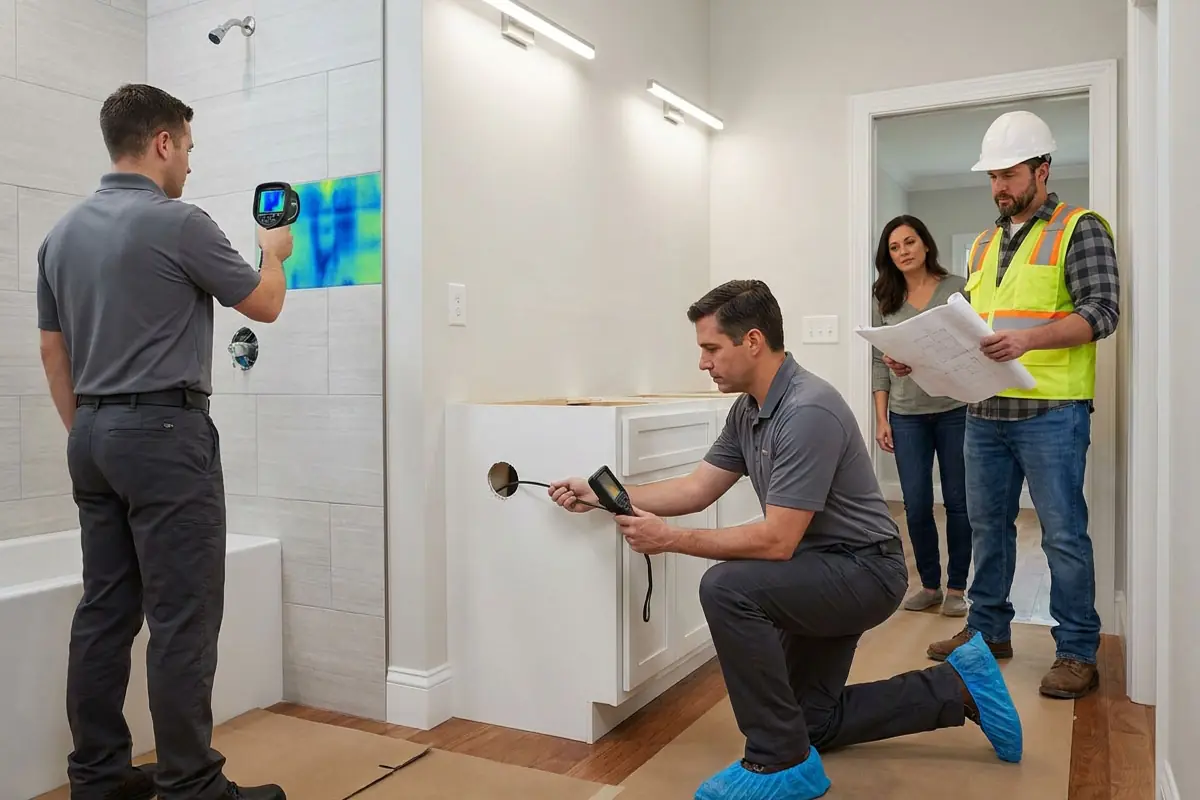
Get people away from hazards, stop the water if you can reach the valve safely, then document the damage and start drying within hours, not days.
Step 1: Make the House Safe Before Anything Else
Water and electricity are the first danger after any leak. If water is near outlets, power strips, appliances or the electrical panel, do not walk through it. If you can reach the breaker panel from a dry spot, switching off power to the affected rooms removes the biggest risk. If the panel itself is wet or you would have to stand in water to reach it, leave it alone and call a licensed electrician.
Look up before you look down. A ceiling that bulges or sags is holding water and can fail without warning, so keep everyone out from under it. Floodwater and sewage carry contamination, and slick floors cause falls. If anyone is hurt, trapped or in danger, or you smell gas, get out and call 911. Belongings and photos can wait.
- Stay out of standing water near anything electrical.
- Keep children and pets away from wet rooms.
- Do not stand under a sagging ceiling or light fixture.
- Leave the house and call 911 for immediate danger or a gas smell.
Step 2: Stop the Water at the Right Valve
Most Garland homes have fixture valves under sinks and behind toilets, and a main house valve that shuts off the whole supply. If a single toilet, sink or water heater is leaking, its own valve may be enough. For a burst pipe or a leak you cannot find, close the main valve, usually located where the water line enters the house, in the garage, or in a ground box near the meter. Turn it clockwise until it stops. Never force a valve that will not move.
If the leak is on the city side, such as a broken main in the street or a leaking meter, or you simply cannot stop the flow, call the utility. Garland Water Utilities lists 972-205-3210 for water and wastewater emergencies, main breaks and emergency shutoffs. The City of Garland supplies water throughout the city. In Dallas, water emergencies go through 311, or 214-670-3111 from outside city limits.
Calling a restoration referral line does not report a main break to the city. Make the utility call first when the problem is on public pipes.
Step 3: Write Down What Happened While It Is Fresh
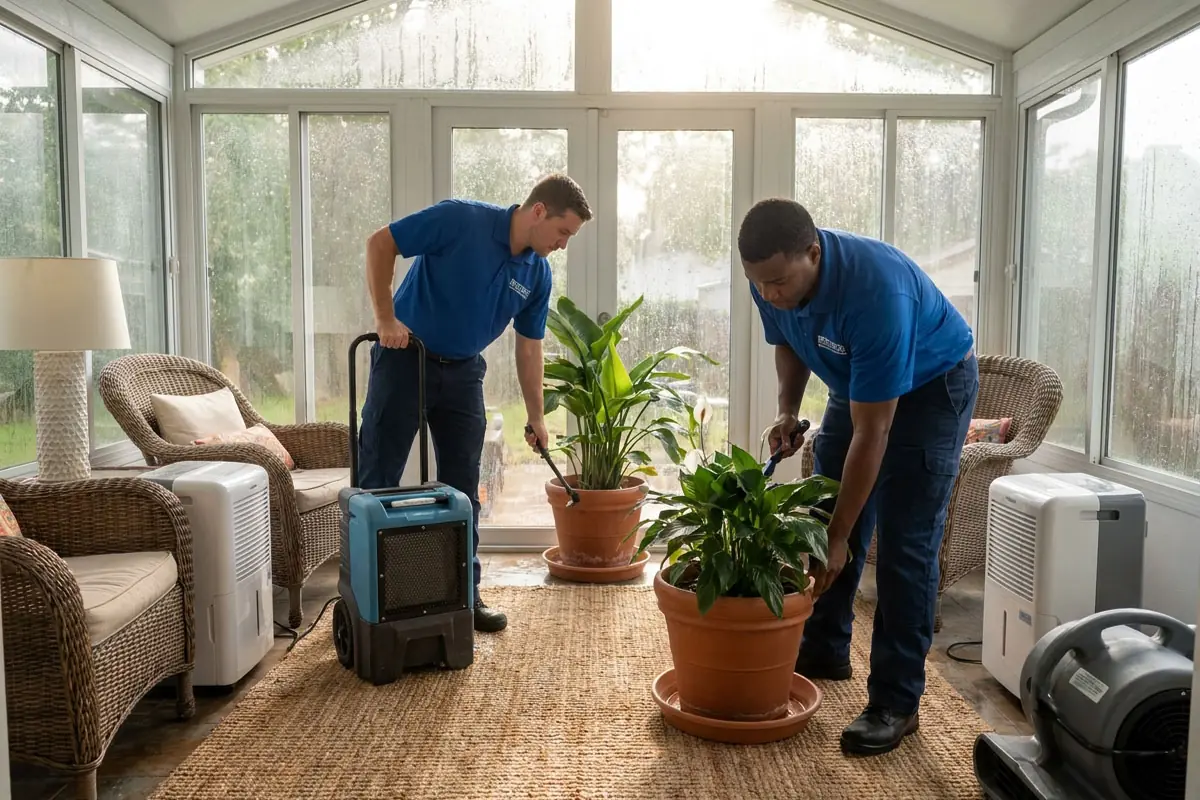
Insurance claims and repair decisions depend on facts gathered early. Note the date and time you found the water, which rooms are affected, where the water seemed to come from and whether it was still flowing. If a plumber or appliance technician finds the cause, keep their written findings. Describe what you saw rather than guessing at a cause that has not been confirmed.
Take photos and short videos from a safe, dry position. Capture the apparent source, every affected room, water lines on walls, damaged furniture and belongings, and serial numbers on damaged appliances. Wide shots show the extent; close shots show the damage.
- Date and time the water was discovered.
- Rooms and materials affected: carpet, hardwood, laminate, drywall, cabinets.
- Whether the source was clean supply water, a drain or sewage, or outside water.
- Names of anyone you called and any report or ticket numbers.
Step 4: Start Drying Quickly, Within Reason
Time matters. The EPA advises fixing the moisture source and drying wet materials promptly, because mold growth becomes more likely the longer materials stay wet. In a humid North Texas summer, damp drywall and carpet pad do not dry on their own in a reasonable time.
Safe steps you can take: move undamaged belongings out of wet rooms, lift furniture onto blocks or foil, pull wet area rugs up if they are light enough, and open interior doors so air can circulate. If the air conditioning is working and is not the source of the leak, running it helps pull moisture from the air.
Know when to stop. Do not run household vacuums or fans in water near outlets, and do not try to handle sewage or floodwater yourself. Water that soaked into walls, under flooring or into insulation needs moisture meters and professional drying equipment to find and remove.
Step 5: Know What Kind of Water You Are Dealing With
The source changes how the cleanup must be done and what it costs. Clean water from a supply line or water heater is the least risky. Gray water from a washing machine, dishwasher or overflowing sink carries some contamination. Sewage and outside floodwater are the most serious, and porous materials they touch, such as carpet pad and drywall, are usually removed rather than dried.
National HomeGuide benchmarks reflect that difference: about $4 to $6 per square foot for clean water extraction and drying, $6 to $9 for gray water and $9 to $12 for sewage. If you do not know the source, say so when you ask for help instead of guessing the category.
Step 6: Call Your Insurer and Get Organized Scopes
Contact your insurance company early to open a claim and ask what they need from you. The Texas Department of Insurance explains that policies treat sudden and accidental water damage differently from gradual leaks, and that flooding from outside needs separate flood coverage. Your insurer will expect you to take reasonable steps to prevent more damage, so keep receipts for anything you spend.
When you talk to restoration providers, ask for the work to be broken into separate tasks: water extraction, drying and monitoring, removal of damaged materials, and rebuilding. Ask who fixes the leak itself and who handles any permits. Get equipment daily rates, minimum charges and how changes are approved in writing. Separate line items make proposals easy to compare and easier for an adjuster to review.
- Open the claim and write down the claim number and adjuster contact.
- Share your photos, notes and the plumber findings.
- Ask the insurer whether they want to inspect before materials are removed.
- Keep every invoice and receipt, including for emergency supplies.
Step 7: Keep the Closeout Evidence
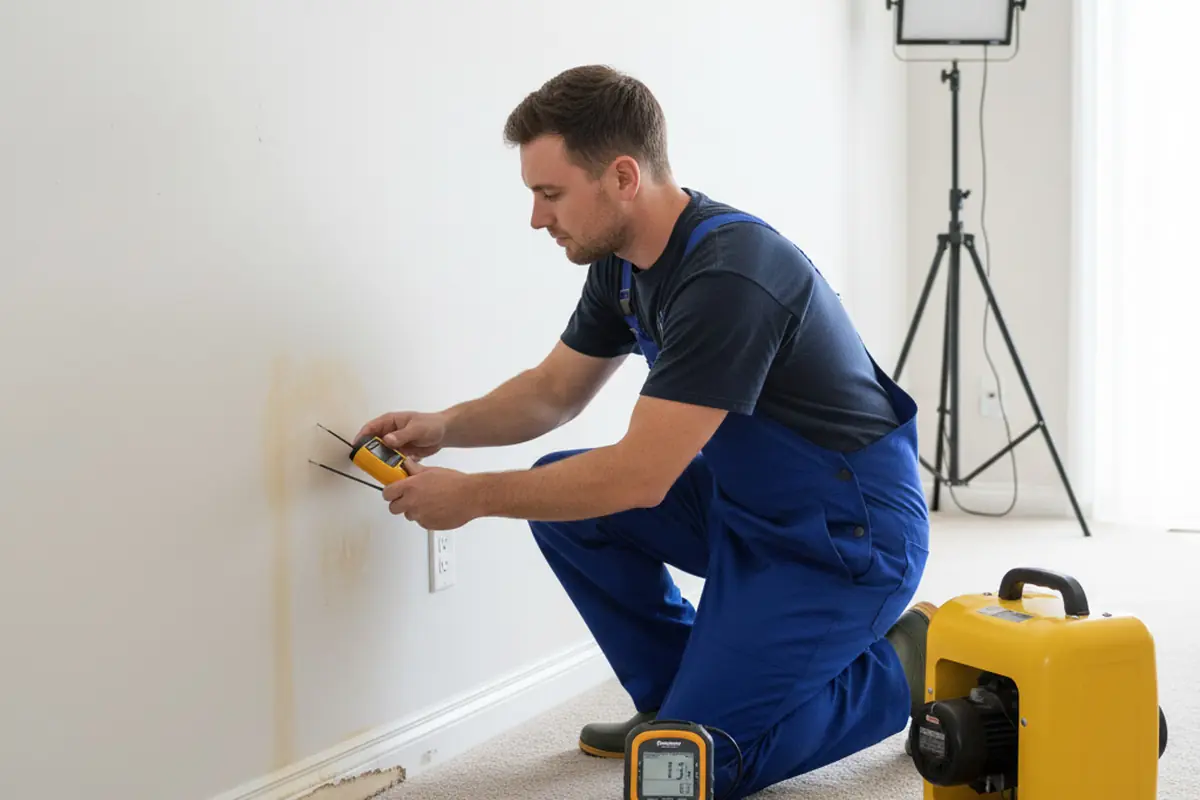
The job is not finished when the fans leave. Ask for the moisture readings that show materials reached an appropriate level before walls are closed or new flooring goes down. Keep photos of the opened areas, the drying records, any permits, approved change orders and final invoices together in one folder.
If you are taking your own readings, record the same spots with the same meter mode each day. A dated moisture log, a contents inventory of damaged belongings and a copy of the final scope protect you if a problem returns or if you sell the home later.
Common Mistakes That Make Water Damage Worse
- Waiting to see if it dries on its own. Water inside walls and under flooring rarely does in a reasonable time.
- Running a household vacuum or plugging in fans in standing water near outlets.
- Throwing out damaged belongings before photographing them for the insurer.
- Painting over a ceiling stain before the leak is fixed and the space above is dry.
- Letting someone start demolition before the damage is documented and the scope is in writing.
- Turning the water back on before a plumber has repaired the pipe.
Each of these either spreads the damage, creates a safety hazard or weakens an insurance claim. Slowing down for ten minutes to document and plan usually saves days later.
When to Call for Help in Garland
Call for professional help when water has soaked into walls, ceilings, cabinets or flooring, when the source is sewage or floodwater, when more than one room is affected, or when you cannot find or stop the leak. The Garland TX Water Damage referral line, (972) 996-6272, is available 24/7 to connect Garland homeowners with independent providers. Ask any provider about availability, charges, licenses and insurance before you authorize work.
First Hour Checklist
Tick items as you go. Saved only in this browser.