
A stain growing during rain may point toward roof entry, while one linked to fixture use may suggest plumbing above. Neither is a diagnosis.
Water Can Arrive From Several Directions
A stain growing during rain may point toward roof entry, while one linked to fixture use may suggest plumbing above. Neither is a diagnosis. Water can travel along framing before reaching the visible ceiling. Note when the mark changes and what was happening. Share safe photographs with the relevant trade so the source investigation begins with evidence.
Give a Sagging Ceiling Space
Keep people and pets away from a bulge, sagging board or loose finish. Do not puncture the ceiling or stand on furniture to investigate. Water near light fixtures requires caution even if lights are off. Use emergency services for immediate danger and have the hazards assessed. Appearance is not a reliable measure of water held in an assembly.
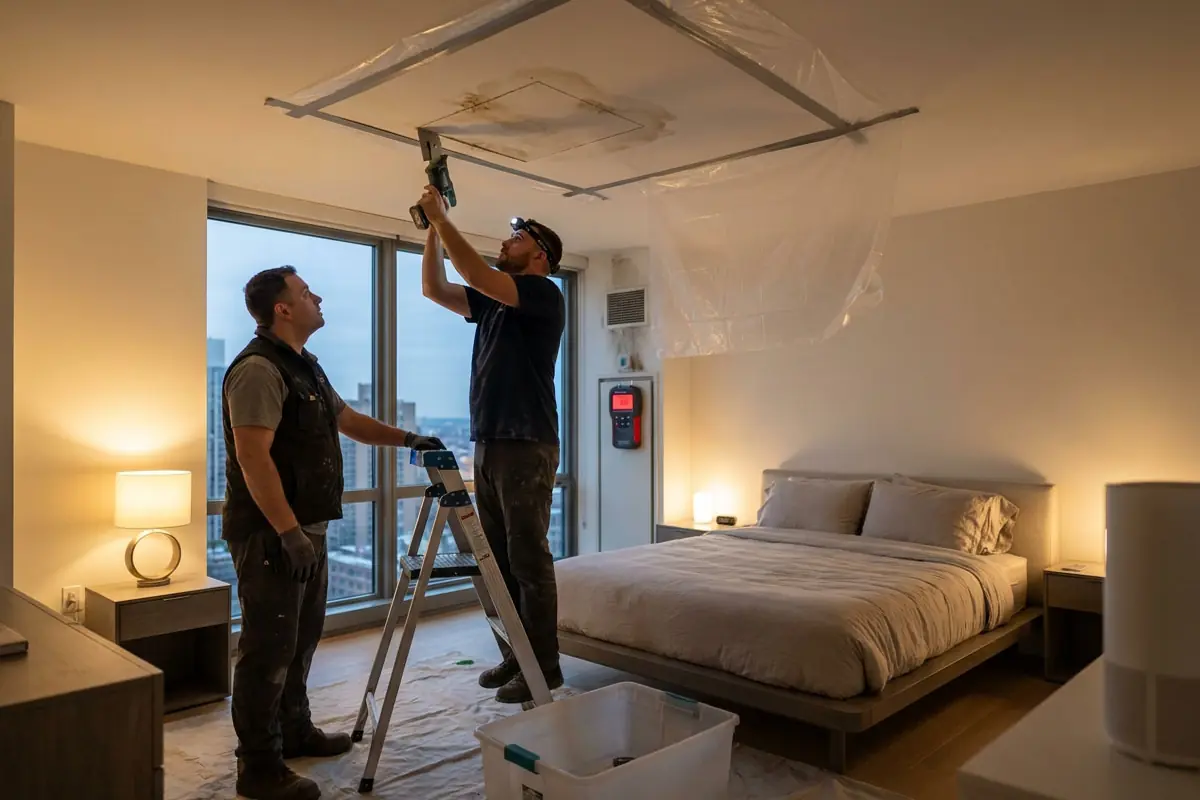
Repair the Entry Point First
A roof, flashing, supply pipe or cooling fault needs its own appropriate repair. Ceiling replacement does not fix that entry point. Ask who handles source repair and temporary protection. If several trades are involved, establish the sequence in writing. Avoid closing a cavity before necessary inspections, moisture assessment and source checks are complete.
Measure the Ceiling Area Before Pricing Repairs
A small damaged board section may require more texture or paint area for a consistent finish. Ask for those quantities separately. The calculator distinguishes drywall and plaster installation and accepts entered removal, insulation and paint. Structural repair and hazardous material assessment are excluded. Older or unfamiliar finishes may need evaluation before disturbance.
Ceiling Repair Costs and Your Insurance Deductible
Texas policies may use different terms for wind, hail and other losses. The source matters when discussing a ceiling claim. Ask the insurer which deductible applies and whether roof, plumbing and interior tasks are covered. The deductible tool only calculates your scenario assumptions. It cannot assign a cause or replace an insurer decision.
Keep the Ceiling Repair Closeout Record
Retain photographs of open assemblies where available, the source repair report and moisture documentation. Ask which repairs remain excluded, including trim, fixtures and insulation. If staining returns, records help distinguish a new event from an unresolved source. A completion date alone is less useful than what was repaired and how materials were assessed.
What Ceiling Water Damage Repair May Cost in Garland, TX
| Work | Benchmark | Source |
|---|---|---|
| Drywall ceiling installation | $1.50 to $3.50 per sq ft | HomeGuide: Ceiling Material Benchmarks |
| Plaster ceiling installation | $2 to $10 per sq ft | HomeGuide: Ceiling Material Benchmarks |
| Cleanup and drying | $4 to $12 per sq ft | HomeGuide: Water Cleanup Cost Benchmark |
National ranges, not Garland offers. Access, hidden damage, minimums and rebuilding change real bids.
Questions to Ask Before Approving Ceiling Water Damage Repair
- Which tasks, quantities and exclusions are written into the scope?
- Who repairs the cause and obtains applicable permits?
- How are equipment days, disposal and changes billed?
- Which licenses and insurance apply, and how can I verify them?
Ask for the business name and written terms. You choose whether to hire an independent provider. A referral is not a warranty, inspection or insurance decision.
Texas Insurance and Garland Rules for Ceiling Water Damage Repair
Describe the source, timing and damage accurately. Keep photographs and professional findings. Ask the insurer which provisions apply. Trade permits and licenses depend on the actual repair, not the name of a restoration service.
Ceiling Water Damage Repair Guidance in Nearby Cities
Guidance for this situation is also available in Dallas, Plano, Mesquite, Richardson, Rowlett and Rockwall. Confirm address availability by phone.
Sources and Further Reading
Ceiling & Drywall Repair Calculator
Measure damaged surface area, then itemize removal and finishes.
Free to use. Inputs stay in your browser.
Sources, Assumptions and a Worked Example
Hypothetical example: A 100 sq ft drywall surface at $1.50 to $3.50 per sq ft gives $150 to $350 for the installation benchmark. Enter demolition, insulation and paint separately.
Results are planning scenarios, not provider prices, professional sizing or insurance decisions. Avoid overlapping scopes. Read the methodology