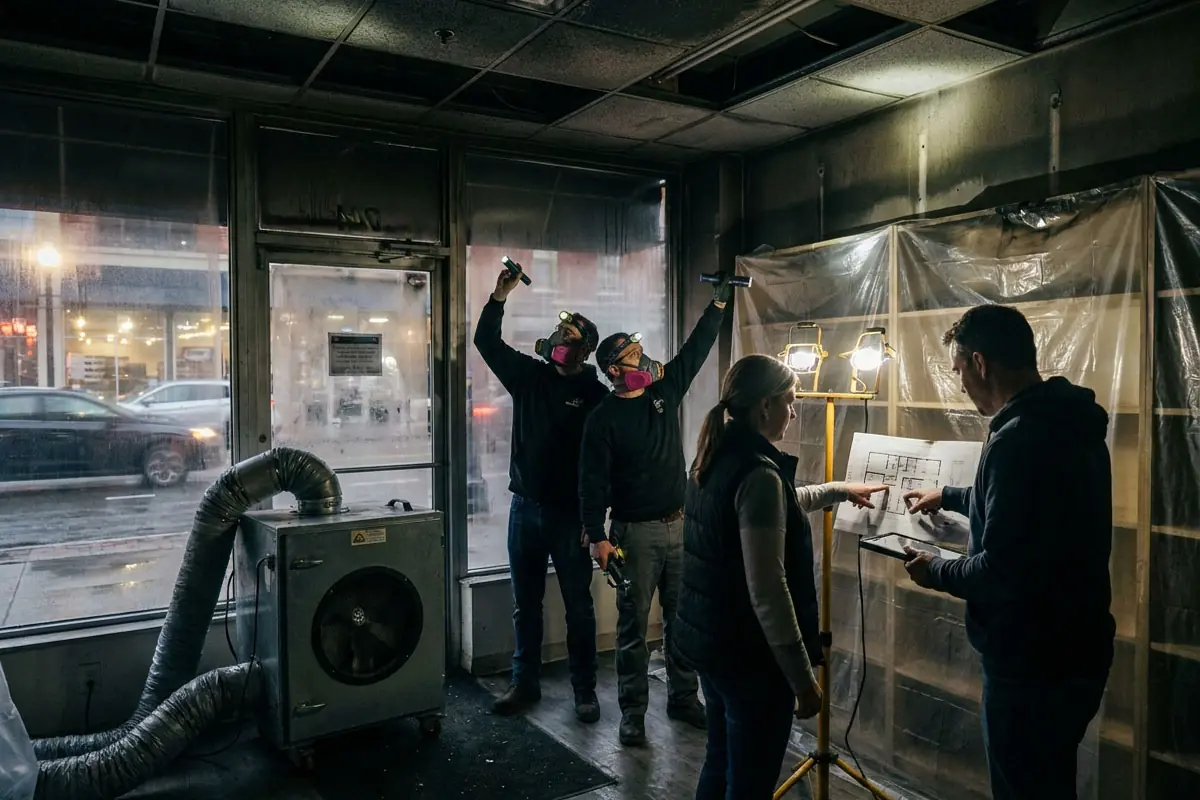
Stay out until officials say it is safe, call your insurer about living expenses, get the fire report, secure the house and keep smoke, soot and water cleanup as separate scopes.
Step 1: Wait for Permission to Go Back In
Do not reenter a fire damaged home based on how it looks from outside. Floors, ceilings and roofs can be weakened, wiring may be damaged and hot spots can reignite. Ask the fire department whether the structure is safe, whether utilities have been shut off and whether you can collect essentials. Call 911 for any active danger.
Utilities such as gas and electricity may have been disconnected. Do not turn them back on yourself. The utility or a licensed professional should restore service after the home is checked.
Step 2: Take Care of People First
Arrange a safe place to stay, medications, clothing and pet care. The American Red Cross and local emergency management often help families displaced by fire. Tell your employer, your children’s school and your mail carrier about the temporary address.
Step 3: Call Your Insurer About Living Expenses
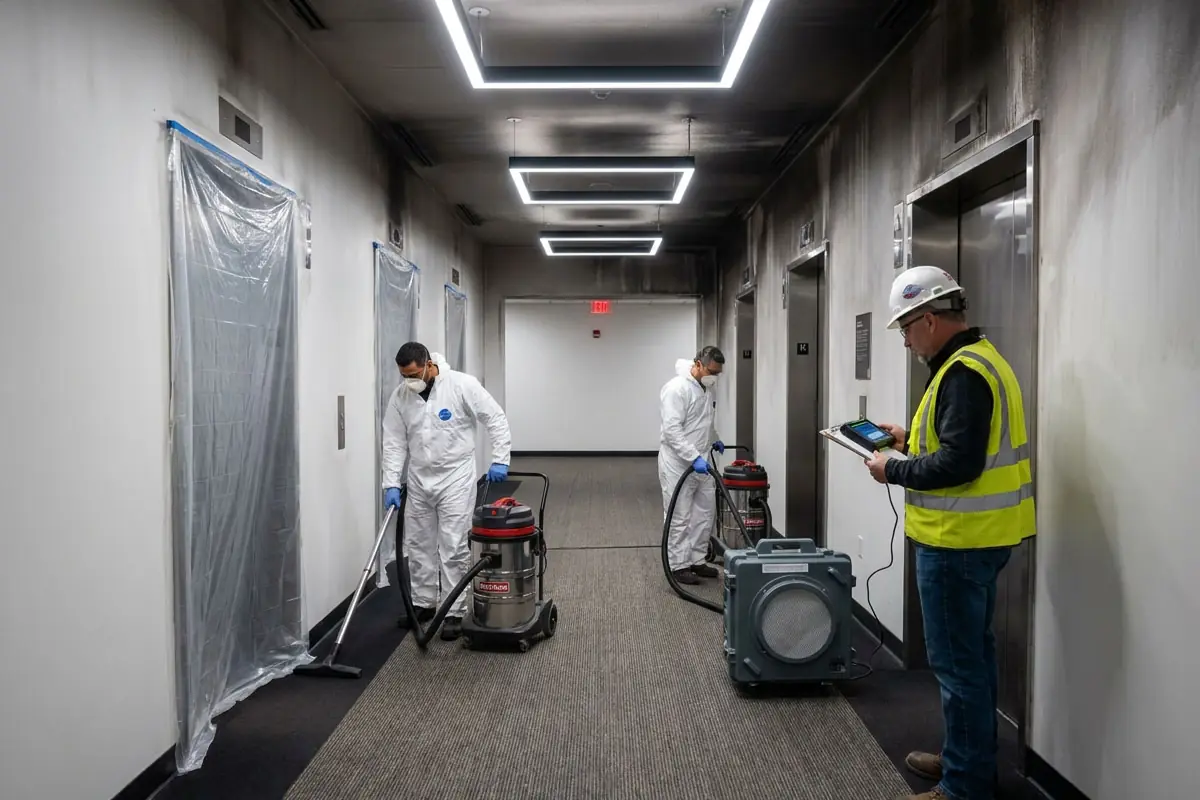
Call your insurance company as soon as possible to report the fire and open a claim. Ask specifically about additional living expenses. The Texas Department of Insurance explains that many homeowner policies include coverage for extra living costs when a covered event makes the home unlivable, subject to limits and policy terms.
Before committing to a long hotel stay or a rental, ask what the policy covers and for how long. Keep every receipt for lodging, meals above your normal food costs and other extra expenses. Renters should check their renters policy, which may also include living expenses.
Step 4: Get the Fire Report
Your insurer will likely ask for the official fire report. Contact the records office of the fire department that responded. Dallas Fire Rescue directs residents to submit an open records request through the city for a copy of a fire report. Garland residents should contact the Garland Fire Department for its records process. Have the incident date and address ready.
The report documents what happened. It does not decide what the insurer will pay, but adjusters rely on it.
Step 5: Secure the Property
A damaged house with broken windows or holes in the roof is exposed to rain, animals and trespassers. Once officials allow access, arrange temporary board up for openings and a tarp for roof damage. Insurers generally expect homeowners to take reasonable steps to prevent further damage, so keep invoices and photos of this work.
Some cities have specific rules. Dallas requires openings in vacant structures to be secured against unauthorized entry under its code. Check requirements in your city, and keep temporary protection separate from permanent repairs in any estimate.
Step 6: Document Everything Before Cleanup
Photograph and video every room, including ceilings, walls, floors and belongings, before anything is cleaned or thrown away. Record serial numbers on appliances and electronics. Start a contents inventory room by room with descriptions, quantities, approximate age and value. The Garland TX Water Damage contents inventory worksheet lets you build that list in your browser and export a CSV for the adjuster.
Ask the insurer whether an adjuster wants to inspect before damaged items are removed.
Step 7: Understand Smoke, Soot and Water
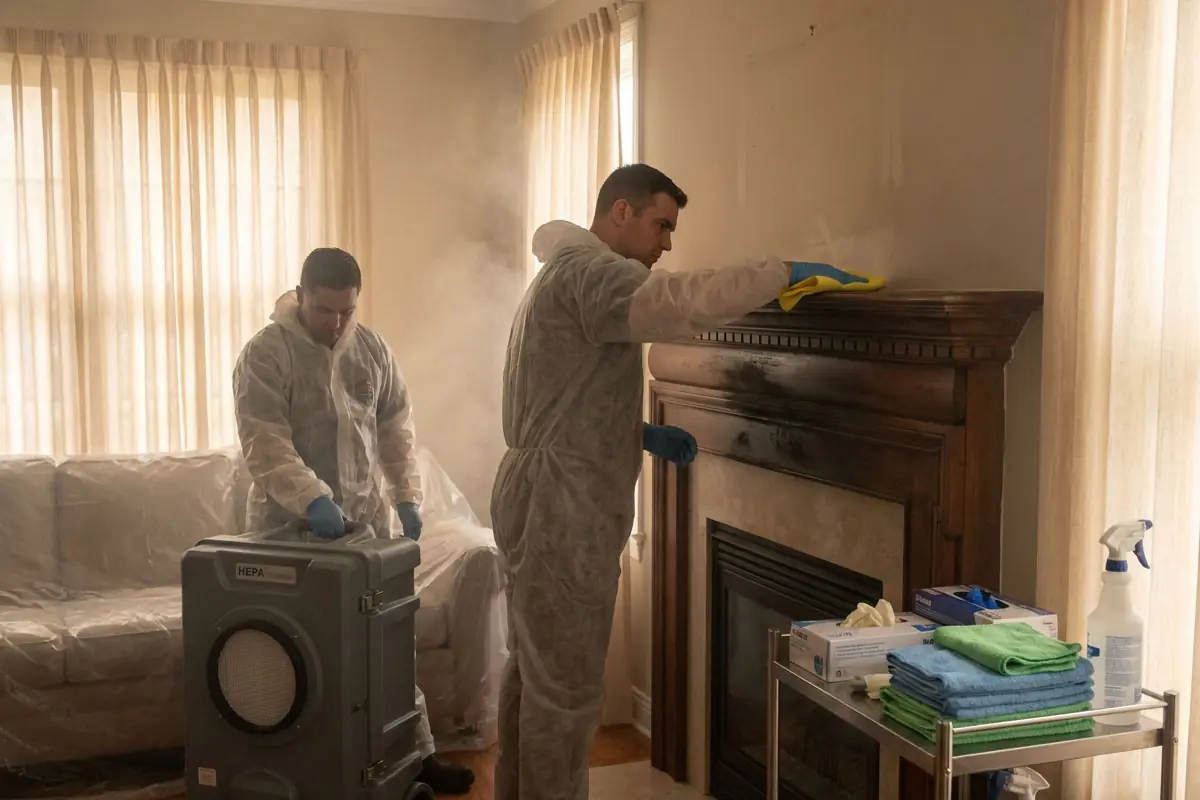
Fire damage usually involves three separate problems:
- Smoke residue and odor that travel through the whole house, including closets and HVAC ducts.
- Soot, the visible black residue, which can be dry or oily depending on what burned. Oily soot smears easily.
- Water from firefighting, which soaks drywall, insulation, flooring and contents and needs drying like any other water loss.
Fire extinguisher residue is a fourth item in some homes. Each needs the right cleaning method for the material. Wiping soot with a household cloth can push it deeper into porous surfaces, so avoid scrubbing until a qualified provider has assessed it.
The EPA advises drying wet materials promptly, and firefighting water is no exception. Mold can develop in a fire damaged home that sits wet.
Food, Medicine and Personal Items
Food exposed to heat, smoke or firefighting water should generally be thrown out, including canned goods that were heated and food in a refrigerator that lost power. Medications exposed to heat or smoke should be checked with a pharmacist before use. Photograph discarded items for your inventory first.
Important documents such as identification, insurance policies, deeds and financial records can often be replaced. Make a list of what is missing and start replacements early, because many claims and assistance programs ask for them.
Smoke Odor and the HVAC System
Smoke travels through heating and air conditioning ducts, so a fire in one room can leave residue and odor throughout the house. Do not run the HVAC system until it has been inspected and cleaned, or it can spread soot further. Ask restoration providers whether duct cleaning and filter replacement are part of the scope, and whether odor treatment is a separate line.
Contents: Clean, Restore or Replace
Many belongings can be professionally cleaned, including hard furniture, dishes, some electronics and textiles, while heavily charred or porous items may not be salvageable. Ask for a written contents list showing what will be cleaned, what is recommended for replacement and why. Keep that list with your own inventory for the insurer.
Your Mortgage Lender and Rebuilding Permits
If you have a mortgage, the insurance check for the structure may be made payable to both you and the lender, who may release funds in stages as repairs progress. Call your lender early to learn its process. Rebuilding after a fire usually requires permits from the city, so confirm who will pull them before reconstruction begins.
What a Complete Fire Restoration Scope Covers
- Emergency board up and roof tarping.
- Water extraction and drying from firefighting.
- Soot and smoke cleaning of walls, ceilings and surfaces.
- HVAC inspection, duct cleaning and filter replacement.
- Odor treatment.
- Contents inventory, cleaning, packing and storage.
- Demolition of materials that cannot be restored.
- Rebuilding, with permits where required.
Not every fire needs every line, but a scope missing several of these deserves questions.
Keep a Running Expense Log
From the first night, keep a simple log of every fire related expense: lodging, meals, mileage, supplies, clothing and replacement essentials. Store receipts in one envelope or scan them to one folder. It makes additional living expense requests and the final claim reconciliation far easier.
Step 8: Get Itemized Restoration Scopes
Ask restoration providers to break proposals into board up, water extraction and drying, smoke and soot cleaning, odor treatment, contents cleaning and storage, demolition and rebuilding. Separate lines let you and the adjuster confirm that the same drying or cleaning is not charged twice.
HomeGuide publishes a broad national fire restoration benchmark of $4 to $7 per square foot, and $4 to $12 per square foot for water extraction and drying. Structural rebuilding needs its own engineered scope. The Garland TX Water Damage referral line, (972) 996-6272, is available 24/7 for Garland homeowners asking about fire damage restoration help.